How Israel's genocide in Gaza extends to digital annihilation
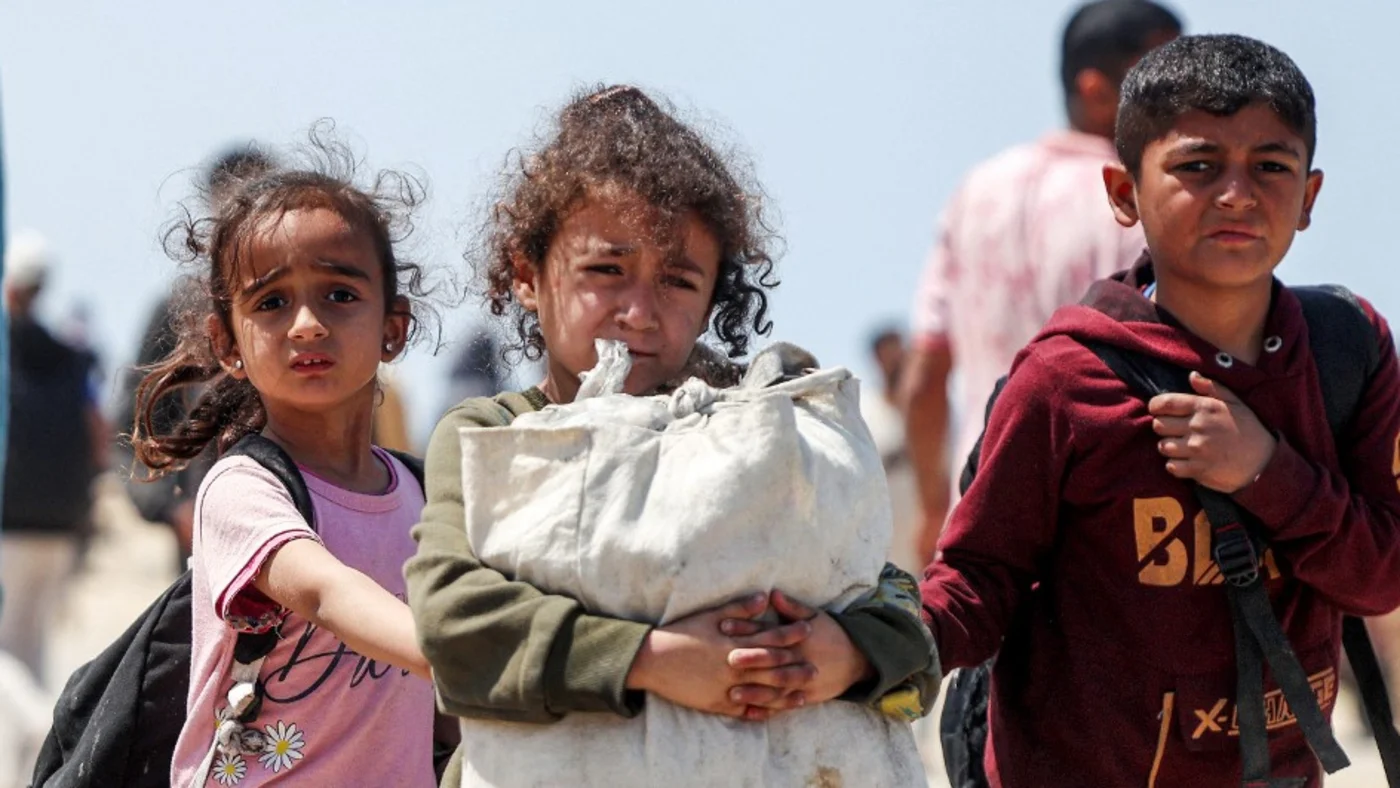
In every Palestinian home, there is a distinctive pouch atop a cupboard, in a hidden drawer, or under a bed in a locked room.
It holds papers and photographs, brown and white envelopes, passports, academic certificates, inheritance and marriage documents. It archives important events in the family’s history, while preserving a path towards the future.
In the modern era, many of these documents have been preserved digitally, enabling quick access and retrieval. Yet this transition has not stopped their destruction amid one of the harshest wars of the 21st century.
Israel’s systematic destruction of Gaza has decimated Palestinians’ personal and collective archives - physical and digital, historical, cultural, academic and social - essentially stripping them of their legal existence.
Since 7 October 2023, Israel’s war on Gaza has triggered mass displacement and reduced tens of thousands of housing units to rubble. With more than 80 percent of Gaza’s buildings damaged or destroyed, and 90 percent of the population displaced at least once, a new reality has emerged.
In addition to tens of thousands of lost lives, Palestinians in Gaza have experienced profound historical and cultural losses. Israel’s assault is not only targeting their physical existence; it is trying to erase every last trace of their cultural and social presence.
Forced to flee repeated bombardments, Palestinian families have lost family photographs, personal papers, legal documents, travel records, birth and marriage certificates. Computers and phones holding digital copies and other memories have been buried beneath ruins.
The erasure of family memory has become an extension of the erasure of life itself - a shift from killing bodies to killing history, identity and continuity.
Campaign of obliteration
According to the United Nations, around half of Gaza’s population of more than two million people have lost their personal identification documents during the war. With infrastructure collapsing and civil record-keeping destroyed, thousands of births and deaths have gone unregistered.
Israel’s campaign of obliteration extends deep into Gaza’s academic and professional infrastructure. All universities in the besieged enclave have been damaged or destroyed, with dozens of professors killed.
The mass destruction of schools has delayed education for more than half a millionchildren, while also destroying data that students need for scholarships and international opportunities. Scientific research and intellectual databases have been wiped out.
There is no justification for Israel’s destruction of Gaza’s cultural, artistic, literary and historical institutions, hundreds of which have been targeted in the current war. This campaign has swept away an estimated 70 percent of Gaza’s archival heritage, including tens of thousands of books and other documents, some dating back to the Ottoman era. An irreplaceable intellectual and historical reservoir has been largely erased.
Just a couple of months into the war, the burning of Gaza City’s central archives wiped out land records, municipal documents and early government correspondence. The destruction of museums ended decades-long preservation projects, such as the Rafah Museum’s collection of ancient coins, copper plates and jewellery.
The magnitude of cultural annihilation amounts to a war crime under international law - one that is consistent with Israel’s long-standing policy of looting and destroying Palestinian cultural history, from seizing 70,000 books in 1948, to confiscating Palestinian Liberation Organisation archives in Lebanon in the 1980s, to the ongoing campaign of systematic destruction.
Sweeping digital crackdown
Recent figures indicate that more than 80 percent of government buildings have been destroyed in Gaza since October 2023, including archives and digital servers - a situation that compounds fears of a total collapse of Palestinian institutional memory, with repercussions on the legal system, and individual and collective justice.
Without family and state archives, many Palestinians have been left unable to prove their identity, property ownership, inheritance, salaries or legal rights. Such erasure, over time, produces a new social class: invisible Palestinians who have been pushed to the margins. This allows society to be governed by influence and opportunism, rather than legitimate transactions and archives.
The physical erasure of Palestinian archives has been mirrored by a sweeping digital crackdown, with tech platforms launching waves of “content removal” targeting pro-Palestinian accounts, in what appears to be a coordinated effort to suppress documentation of the war.
Human Rights Watch has identified several major patterns of unjustified digital repression, including content removal, account disabling, shadow banning and feature restrictions - even when posts are peaceful or purely fact-based.
This digital erasure extends beyond Palestine to supporters around the world - including activists, academics and journalists - through algorithmic filtering and AI-driven suppression designed to suffocate Palestinian visibility and the Palestinian narrative worldwide.
For Palestinians, loss - of land, of documents, of libraries, of archives, of lives - is not new. It has been a persistent feature of their history, from 1948 to the present day. The novel aspect is digital erasure: a battlefield where even memory is targeted.
Yet despite all attempts at physical and digital annihilation, every Palestinian carries a hidden trove in their heart: thousands of stories, vivid and unyielding. No war or genocide can erase them - and this steadfastness will carry Palestinians towards a future brighter than the current darkness.
The views expressed in this article belong to the author and do not necessarily reflect the editorial policy of Middle East Eye.